
How to Choose the Best Daycare in Dhaka for Your Child
Finding the right daycare in Dhaka for your child is one of the most important decisions you will make as a parent. Whether you are returning to work after maternity leave, relocating to a new neighbourhood, or simply looking for structured early learning support, choosing the right daycare centre in Dhaka takes careful thought, research, and a few visits.
This guide covers everything you need to know from safety standards and staff qualifications to curriculum, location, and the right questions to ask before you enrol.
Why Choosing the Right Daycare Matters
For most families in Dhaka, both parents work full-time. A good daycare for working parents is not just a place to leave your child safely; it is where your child spends a large part of their waking hours, builds their first friendships, and begins developing the social, emotional, and cognitive skills that will shape them for years to come.
The demand for quality childcare services in Dhaka has grown significantly over the last few years, especially in areas like Gulshan, Banani, Uttara, and Dhanmondi, where many corporate families are based. But with more options available, it can be difficult to know what truly separates a great daycare from an average one.
What Makes a Daycare “The Best” in Dhaka?
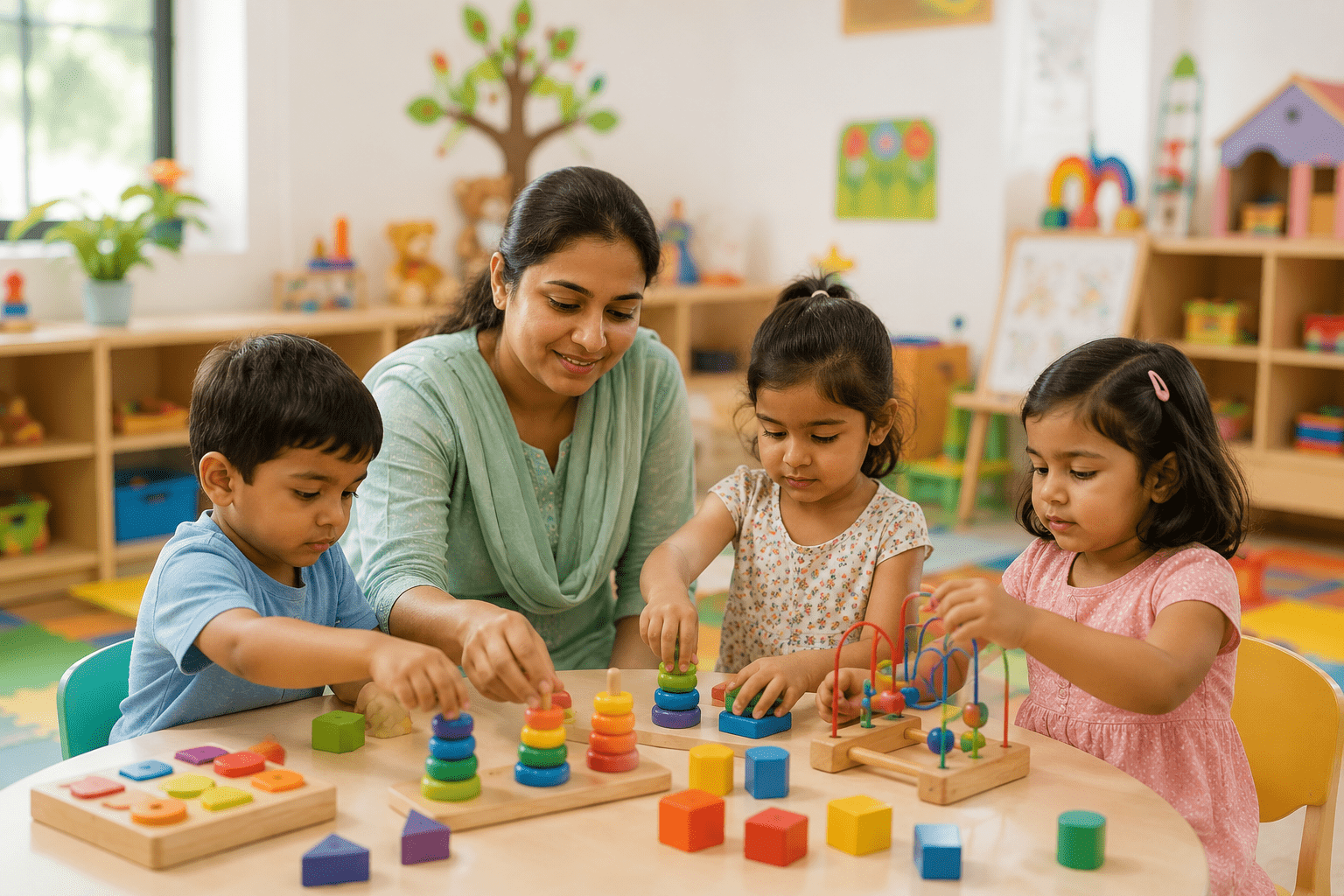
When parents search for the best daycare in Dhaka, they are usually looking for a combination of safety, qualified staff, a structured curriculum, and convenient location. Here are the core factors every parent should evaluate before choosing a daycare centre in Dhaka.
1. Safety and a Secure Learning Environment
Safety is the single most important factor when evaluating any child daycare services provider. Before enrolling, visit the centre in person and look for:
- Childproofed furniture, corners, and play areas
- Clean restrooms and proper diaper-changing facilities
- Secure entry and exit points with controlled access
- CCTV monitoring and visible supervision at all times
- Clear emergency and illness protocols
A safe learning environment means your child can explore, play, and learn without unnecessary risks. Any trusted daycare will welcome an unannounced visit and be fully transparent about their safety measures.
2. Nanny-to-Child Ratio
One of the most important but often overlooked factors is the ratio of nannies to children. Lower ratios mean more individual attention, faster response to your child’s needs, and a calmer, more nurturing environment.
As a general guide:
- Infants (under 12 months): 1 nanny to 3–4 children
- Toddlers (1–3 years): 1 nanny to 4–5 children
- Preschool age (3–6 years): 1 babysitter to 6–8 children
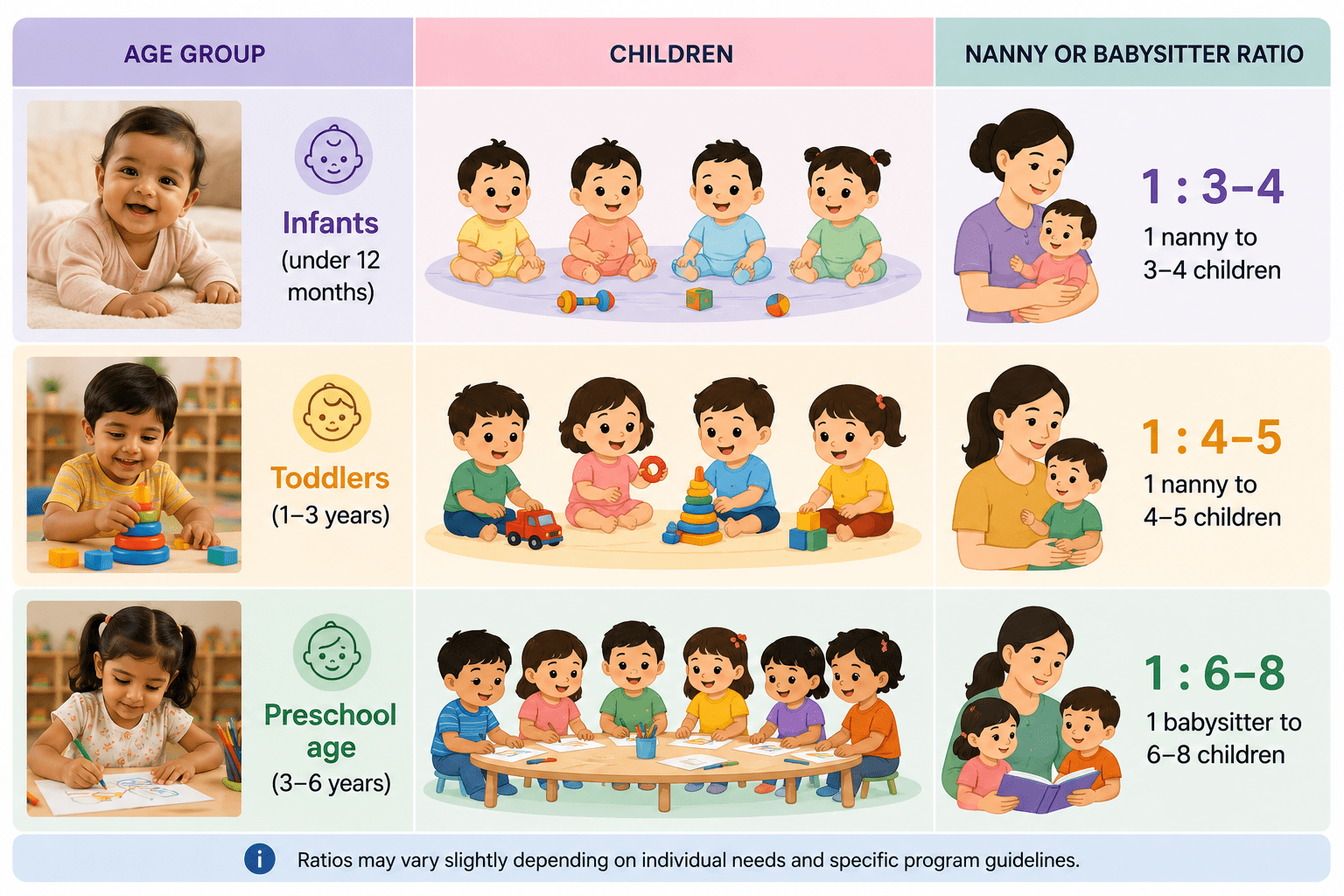
Overcrowded rooms with too few staff are a clear red flag, regardless of how attractive the facility looks.
3. Certified Educators and Qualified Nannies (babysitters)
Ask directly about staff qualifications. Are the educators trained in early childhood education? Do they hold certifications in child first aid? Are all staff members background-checked before being placed with children?
A daycare centre in Dhaka that invests in hiring and regularly training qualified nannies is far more likely to provide consistent, high-quality care. Ask whether staff undergo any ongoing professional development not just a one-time training at the time of hiring.
At Ankur Care, for example, every nanny is trained in-house through the Ankur Academy programme and undergoes re-training every month ensuring that care quality stays consistent over time.
4. Curriculum, Play, and Early Learning
Even very young children benefit from structure. A good early learning centre does not just provide supervision, it offers a thoughtfully designed daily routine that balances free play with guided activities.
Look for a centre that incorporates play-based learning an approach where children develop language, motor skills, creativity, and social skills through structured and unstructured play rather than rote instruction. Research consistently shows that play-based learning supports stronger cognitive development, better emotional regulation, and more sustainable early learning outcomes than rigid academic instruction at a young age.
A strong daily curriculum might include:
- Circle time, storytime, and songs for language and listening
- Art and craft for creativity and fine motor skills
- Outdoor play for physical development and gross motor skills
- Simple science and nature activities for curiosity and cognitive development
- Group activities for social and emotional development
5. Age-Appropriate Programs
Whether you are looking for a daycare for toddlers, infant care, or after-school support for older children, make sure the centre has age-specific programmes with separate spaces and routines for different age groups.
A one-size-fits-all approach rarely works in early childhood education. A 6-month-old has vastly different needs from a 4-year-old, and the best daycares design their programmes accordingly.
6. Preschool Readiness Support
One of the most valuable things a quality daycare can offer is preparing your child for formal school. Look for centres that actively support preschool readiness, helping children develop the attention span, language skills, social skills, and self-regulation they will need when they enter preschool or primary school.
This includes structured activities around early literacy, basic numeracy concepts, following instructions, and taking turns, all within a play-based, low-pressure environment.
7. Social and Emotional Development
Beyond academics, the best child daycare services prioritise social and emotional development, helping children learn how to express their feelings, resolve conflicts, make friends, and build confidence.
Look for nannies who actively coach children through social situations rather than simply managing behaviour. A trusted daycare should be a place where your child feels emotionally safe, understood, and encouraged.
8. Communication with Parents
The best daycare services in Dhaka keep parents in the loop consistently. Before enrolling, ask:
- Will I receive daily updates on meals, naps, and activities?
- How does the centre communicate illness or incidents?
- Can I access a daily report or photo update?
- Is there an open-door policy for parent visits?
Transparency and open communication are signs of a well-run, trusted daycare that genuinely partners with parents rather than operating as a closed facility.
9. Location, Hours, and Flexibility
For most working families in Dhaka, convenience is as important as quality. Look for daycare services in Dhaka that are located near your home or workplace, with operating hours that align with your working schedule.
Key questions to ask:
- Do you offer full-day and half-day options?
- What are your opening and closing times?
- Is there flexibility for early drop-off or late pick-up?
- Do you have a corporate or subsidised option for company employees?
10. Environment, Space, and Hygiene
Finally, trust your instincts when you visit. Does the centre feel warm, clean, and welcoming? Are the children engaged and happy? Do the baby sitters interact with children with patience and genuine care?
A quality child development center should feel like a second home safe, stimulating, and nurturing.
Questions to Ask Before Enrolling
Before committing to any daycare in Dhaka, prepare a list of questions to ask during your visit:
- What is your nanny-to-child ratio for my child’s age group?
- Are all staff background-checked and trained in child first aid?
- What does a typical day look like for my child?
- How do you handle illness, accidents, or emergencies?
- Can I visit unannounced once my child is enrolled?
- What is included in the fee – meals, nappies, activities?
- Do you offer corporate or subsidised daycare partnerships?
How Little Bloom Stars Approaches Daycare in Dhaka
At Little Bloom Stars by Ankur Care, we have built our early learning centre around the belief that the best daycare centre in Dhaka should be safe, joyful, and developmentally rich.
Our centres in Gulshan, Banani, Uttara, and Dhanmondi offer:
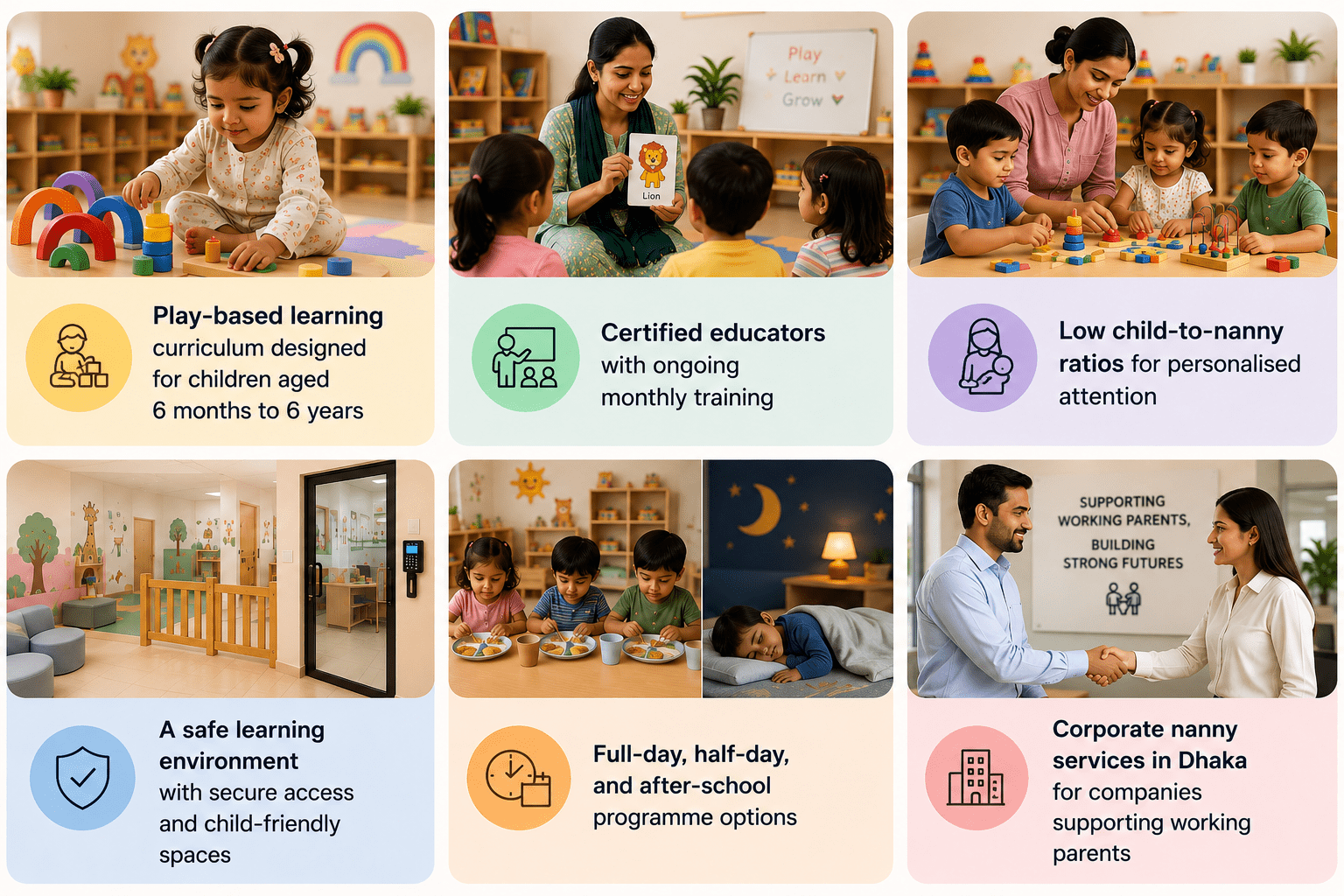
- Play-based learning curriculum designed for children aged 6 months to 6 years
- Certified educators with ongoing monthly training
- Low child-to-nanny ratios for personalised attention
- A safe learning environment with secure access and child-friendly spaces
- Full-day, half-day, and after-school programme options
- Corporate daycare services in Dhaka for companies supporting working parents
Whether you are a working parent looking for reliable daily care, or a family seeking structured early childhood education close to home, Little Bloom Stars is designed to support your child’s growth at every stage.
Book a Tour at Little Bloom Stars
Final Thoughts
There is no single “perfect” daycare the right choice depends on your child’s personality, your family’s schedule, and what matters most to you. But by focusing on safety, qualified nannies, a strong curriculum, and open communication, you will be well-equipped to find a daycare in Dhaka that genuinely supports your child’s child development and gives you peace of mind every working day.